

The future is GEO: How to optimise your site for AI search
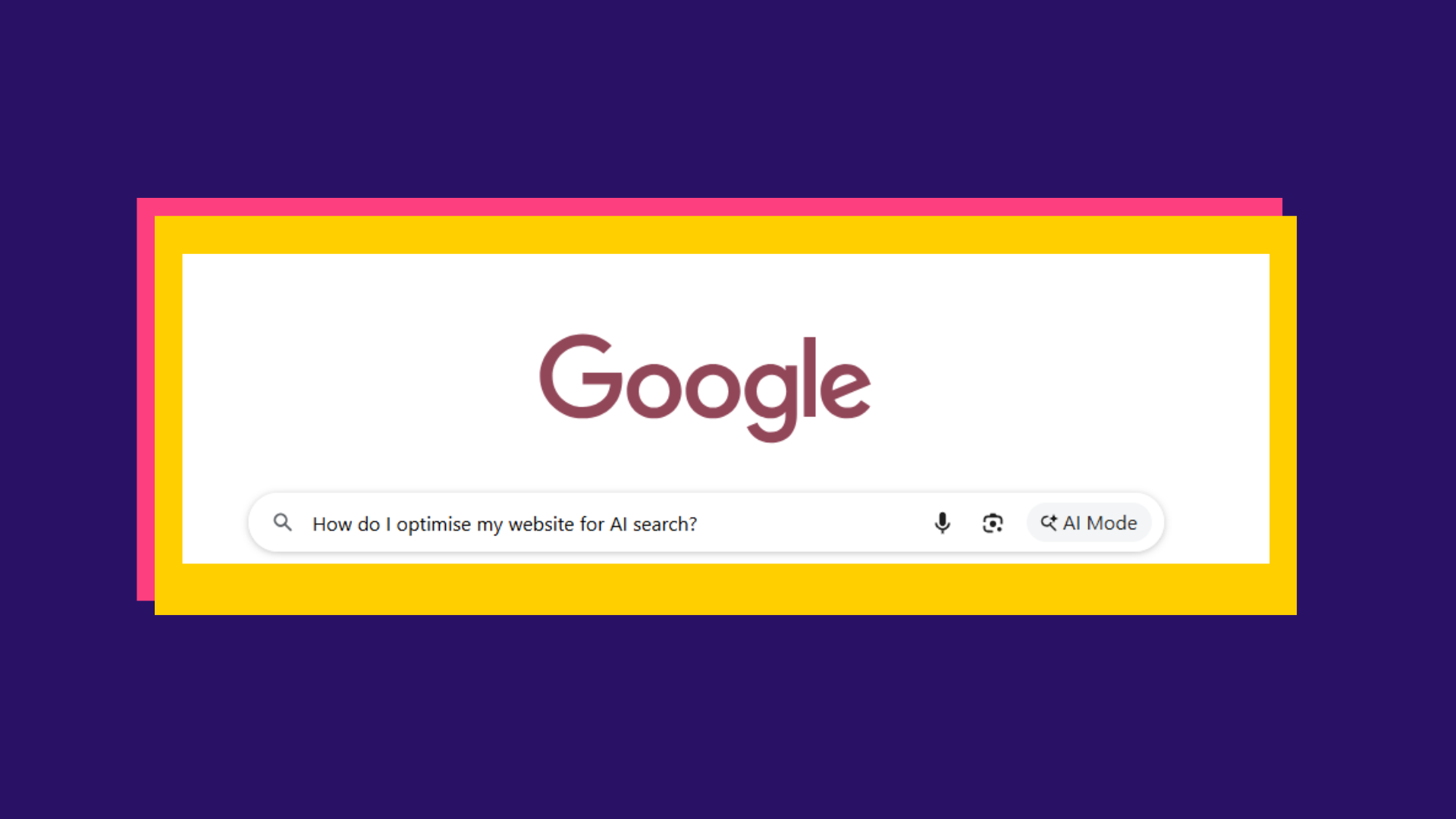
AI search is no longer the future – it’s embedded firmly in the present and is here to stay. Several LLMs (large language models) are already being widely used across the market, with Google even rolling out its own “AI mode”, which it says will completely replace traditional search in future.
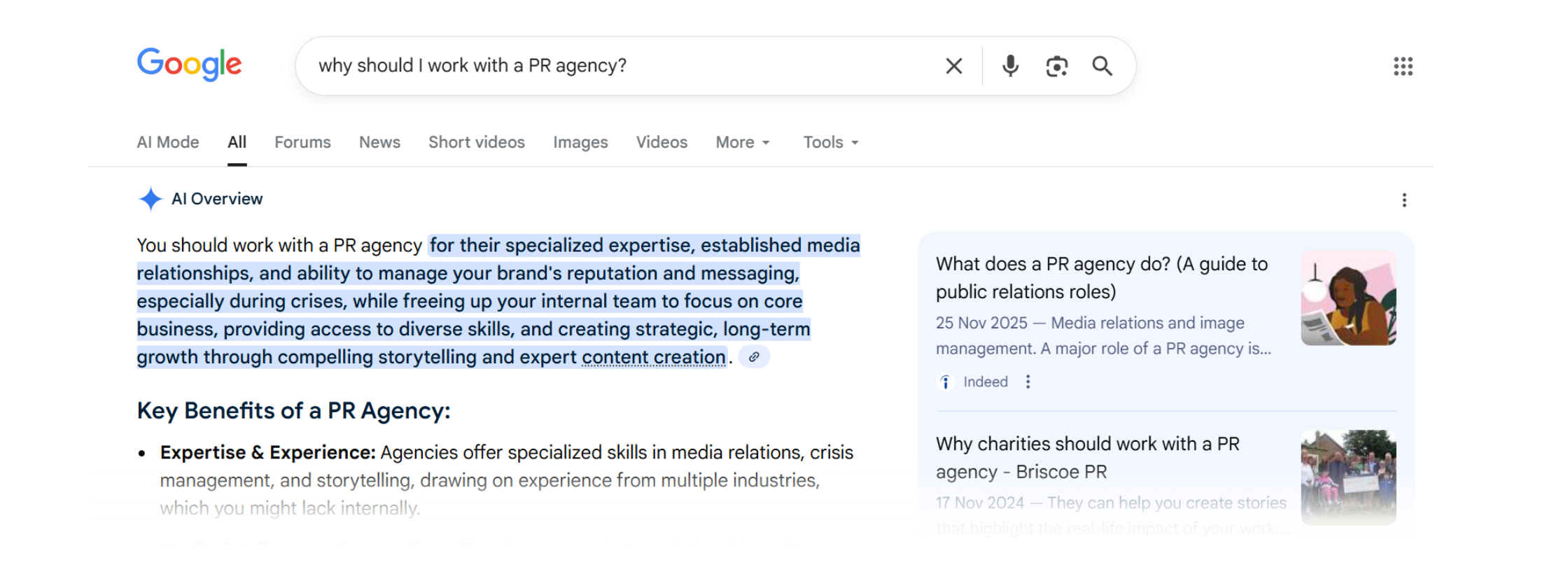
Google’s AI Overviews are having an impact, too. While click-through rates for organic search results can be much lower on pages with an AI Overview, sources cited in AI answers often have higher conversion rates, meaning that getting into these AI answers is essential for maintaining online performance.
Therefore, with AI search rising in prominence, so too does the importance of GEO (generative engine optimisation) – the process of optimising your site for AI answers. The time to start working on a GEO strategy is now, but we know that this can feel like a daunting task at first. So, to help you through the process, we’ve outlined some of the key steps involved below.
Optimise for topics rather than keywords
As with traditional search, the first step in GEO is to do your research, but you will have to go about it slightly differently this time around. Instead of singling out specific keywords, you need to focus on the topics your audience is talking about.
This is because people use AI differently to traditional search engines. Rather than entering short, three-word queries, searchers tend to enter fully fleshed out prompts, often in the form of questions. So, you’ll need to brainstorm the topics your audience is talking about and the questions they’re likely asking LLMs, then build your strategy around these.
Optimising your own site
LLMs generally look for well-structured content to pull information from, so it’s important that your site content is simple and easy to understand – for both your readers and AI.
Creating on-site guides and FAQ pages about the key information your audience is looking for can be a good way of achieving this. It provides your visitors with direct answers to their query while helping to establish your site as a credible and trustworthy source of information within your industry – as well as supporting your AI optimisation efforts.
 You’ll need to ensure your site is in good health tech-wise, too, so that it’s easy for AI tools to crawl. Make sure your user experience is up to scratch by cutting down any long loading times and optimising your site’s meta data.
Secure earned media coverage
A major focus of your AI optimisation efforts will be getting your own site ship-shape. However, the most commonly cited sources in AI answers are actually media sites like news outlets, meaning earned media is also an essential factor. Brands with high media influence are generally much more likely to get into AI answers, so outreach and PR should be a huge part of the process.
Reputation management should also be taken into account. AI tools will consider what other people are saying about your brand online in things like forums and reviews, as well as what your brand says about itself. Keeping an eye on how users are perceiving your service and managing this is key to ensuring AI picks up your content and refers to your site in a positive way.
Re-evaluate your metrics
With a new era of search comes a new set of metrics to measure it. As AI is having such a big impact across the board, analysing performance needs to go beyond rankings and traffic – you need to take AI factors into account, too.
As AI is so new and constantly evolving, it may take time to identify the most relevant and impactful metrics for your site, and the right ones to use could change over time as new issues and measures emerge. However, a good starting point is to look at factors like the number of AI citations your site has received and your AI share of voice for key topics. How is your site performing on these compared to your competitors and how can you improve on them?
Need a hand? Give us a knock
If you need support with your GEO efforts, or require help with other digital marketing factors like outreach, PR or content, get in touch with our friendly team to learn more about the services we offer.
Continue reading

Instagram for SEO: How can businesses make their content more attractive to Google?
More than ever, it looks like we’re seeing a definitive crossover between social media and search. Thanks to Instagram’s 2025 SEO update, businesses and content creators can now generate visibility for their brand beyond the confines of the app. So, what exactly has changed and how can you leverage the updates to get your social … Continued

Our 2025 resolutions: from Perplexity to podcasting
The Christmas season has come to an end, and as we say goodbye to festive films, Baileys by the pint and a casual chocolate orange before 8am, we welcome in a new year and a chance to start afresh with (not so) clear heads. While new year’s resolutions usually call to mind hot yoga and … Continued
BrightonSEO – Big takeaways from 2024
It’s the biggest and best (we think!) search marketing event in the country and Front Door Beth was lucky enough to be there for this year’s BrightonSEO, learning all about the future of search, content marketing and to no one’s surprise… AI. There were some fantastic speakers at the conference this year, with talks on … Continued

SEO trends and predictions: The latest for 2024
The world of SEO isn’t static – it changes all the time. Google is constantly issuing new updates which tweak and refine the functionality of search. This often creates a little chaos as SEOs discover how best to leverage the changes into increased visibility and improved search rankings. On top of this, new technology and … Continued