

How can you measure PR success in 2026?

Being able to measure PR success has never been entirely straightforward. Historically, one of the most commonly used measures was Advertising Value Equivalent, or AVE. The idea was simple enough, if you had to pay for the space your PR coverage received, what would it have cost you?
But, PR is about far more than the cost of a media placement and AVE has gradually become a much less relevant way of measuring its impact.
Then came the growing importance of digital PR and SEO. Suddenly, success wasn’t just about securing coverage. Backlinks, domain authority, referral traffic and search visibility all became part of the conversation.
And now, we’re entering another era. As more people use AI search tools to research businesses, compare products and ask for recommendations, brands need to think about a new kind of visibility: how often they appear in AI-generated answers, and what those answers actually say about them.
That doesn’t mean the traditional measures of PR success have disappeared. Media coverage, reputation and audience engagement are still hugely important. But in 2026, measuring PR success means looking at a much bigger picture. So, what should you actually be measuring?
AI visibility and Share of Model
One of the newer ways of measuring brand visibility is through Share of Model, which looks at how often your brand appears in AI-generated answers compared with your competitors.
If someone asks an AI tool to recommend businesses in your sector, explain who the leading companies are or compare different providers, does your brand appear in the response? And if it does, what is being said about you?
The more credible information there is about your business online, the easier it is for search engines and AI tools to understand who you are, what you do and why you should be considered. That includes things such as:
- Expert commentary and thought leadership
- Media coverage
- Trusted backlinks and brand mentions
- Reviews and third-party recommendations
- Clear, useful content on your own website
It’s also important to make your content easy to understand and navigate. Clear headings, bullet points, FAQs and structured information can all help make your content more accessible to both people and technology.
The quality of your media coverage and backlinks
By now we know that not all coverage is created equal. A mention in a publication that your target audience genuinely reads is likely to be far more valuable than several pieces of coverage in places that have little relevance to your business.
And the same applies to backlinks – PR measurement has moved away from the idea that more links automatically means the campaign has done well. It’s far more about authority and relevance. Are trusted sources talking about your business? Are respected industry publications linking to your website? All of this helps to build a stronger digital footprint.
The goal is to build the kind of external credibility that strengthens your reputation and makes it easier for search engines, AI tools and potential customers to understand why your business is worth paying attention to.
What are people saying about you?
Coverage tells you where your brand is appearing, but sentiment helps you understand what people actually think about it.
Social media monitoring and sentiment analysis can help PR teams track whether conversations around a brand are broadly positive, negative or neutral. And it can also go much deeper, for example you can look at:
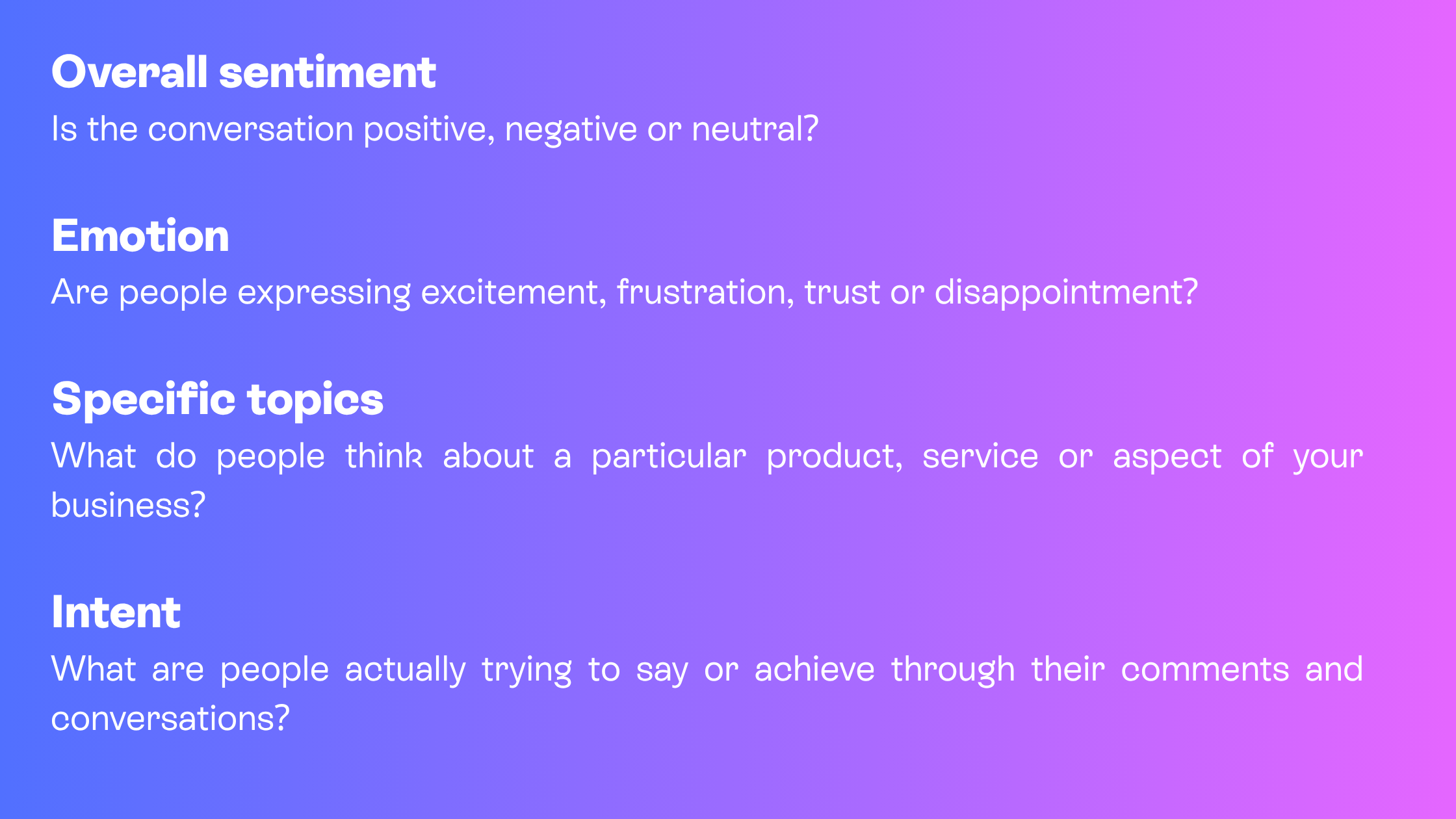
This can be particularly useful for spotting potential issues before they become bigger problems. But it also provides valuable insight into what your audience likes, what they don’t, and where there may be opportunities to improve your messaging, products or customer experience.
PR referral traffic
Good PR should help put your business in front of new audiences, and one way of measuring this is through referral traffic. It shows you when someone arrives on your website from another source, such as:
- A news article
- An industry publication
- A blog
- A social media post
- Another website that has linked to you
Tracking this can help you understand which pieces of coverage are actually driving people to your website. You might find that one article generates hundreds of visits, while another receives plenty of attention but very little traffic. Both could still have value, but they are delivering different results.
Looking at referral traffic alongside other measures, such as engagement and conversions, gives you a much clearer idea of what is actually working.
Branded search volume
Another useful indicator is branded search, which is the number of people searching specifically for your business or brand online. For example, if more people are searching for your company name following a PR campaign or a broadcast interview, that can be a good sign that awareness is growing.
To measure this, you can use platforms like Google Trends or SEO tools to track changes in your branded search activity over time.
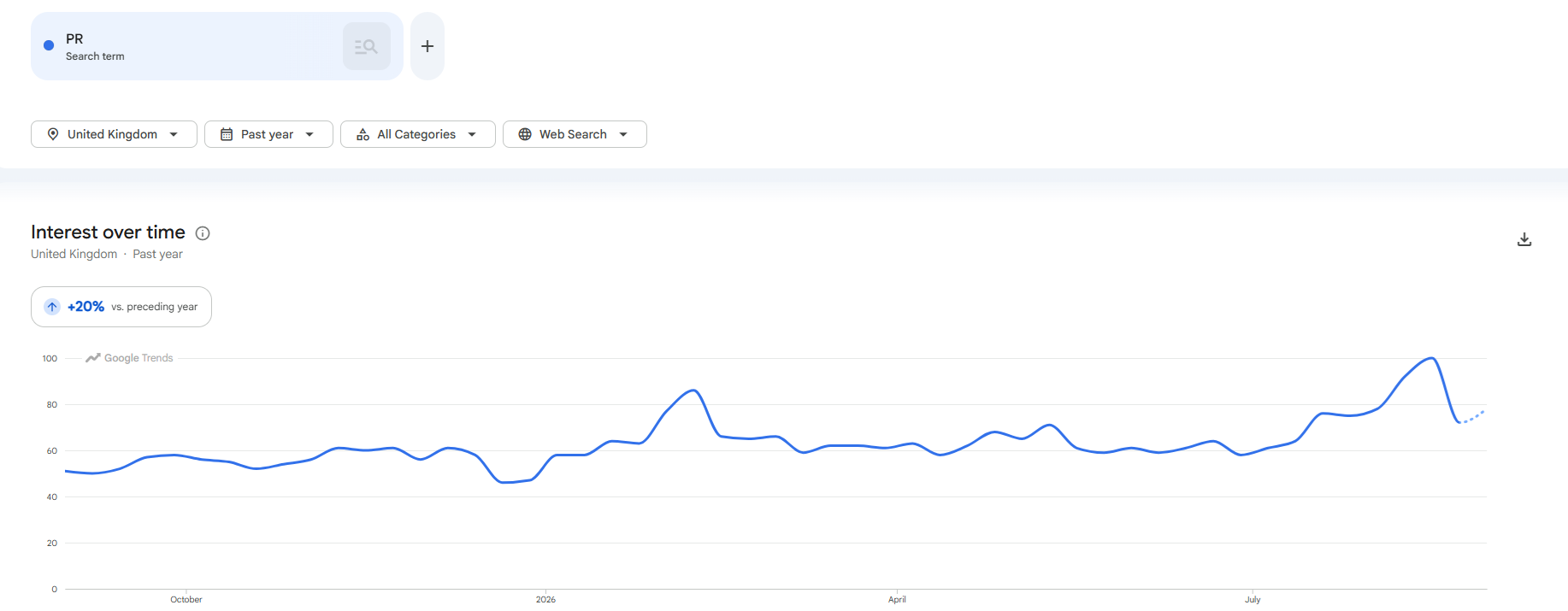
PR can contribute to improving your branded search volume by consistently putting your business in front of new audiences. That could include anything and everything from expert commentary and thought leadership to social media activity, influencer partnerships and broadcast PR.
The stronger and more recognisable your brand becomes, the more likely people are to actively seek you out.
PR success is about far more than one number
In 2026, the best approach when it comes to PR metrics is to look at the bigger picture.
Yes, you should always measure your coverage. But also look at who is seeing it, what they are doing afterwards and how it is contributing to your wider visibility and reputation.
Are you appearing in the right publications? Are people visiting your website? Is your reputation positive?
And increasingly, when people ask AI-powered tools about your industry, is your business part of the conversation?
To find out more about our PR and media relations expertise, visit our services page here. We’d love to chat.
Continue reading

A Summer at Front Door
A summer at Front Door: What’s it like doing work experience at a PR agency? by Iwan Chadwick I started working with Front Door in May as a job over the summer. It was a bit strange suddenly living the 9-5 life. A few weeks earlier I’d been rolling out of bed whenever I fancied; … Continued

Ding Dong! It’s the May 2026 round-up
Welcome to the Front Door May 2026 round-up. It’s been a big month for the team, from a successful awards season for our clients to delivering even more media training, May has given us plenty to shout about. As we dive into June, here’s a quick look back at what the last month had in … Continued

Ding Dong! It’s the April 2026 round-up
April was a big month of networking breakfasts, student talks, media training, big client news and a lot of coverage. So as we get stuck into May, here’s a look back at some of the highlights from another busy month across Front Door. Daring to Dream hits the right note One of the standout client stories of April came from Daring to Dream, the charity supporting the emotional … Continued
Ding Dong! It’s the March 2026 round-up
March flew by in a whirlwind of launches, data-led campaigns, trips and a lot of coverage – from health and wellbeing to fintech, business leadership and consumer finance. So before we blink and April disappears too, here’s a look back at some of the highlights from across Front Door HQ last month. Making West Wales … Continued